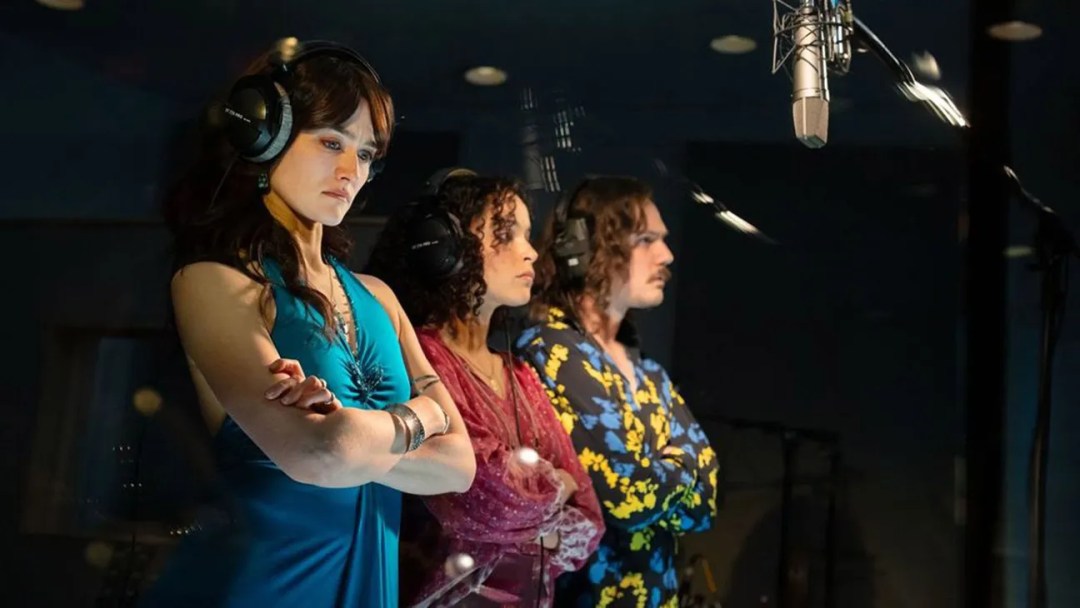
You’ve got a ticket to the masquerade — at Broadway’s Stereophonic.
Framed through the lens of a 1970s recording studio and the years-long process of making a record, the Tony Award-Winning play casts a light on a creative process as a group of musicians walk into the recording studio friendly and bright-eyed and walk out as strangers, nearly three years later — with an album they now can’t stand.
David Adjmi’s play serves as a commentary on the creative process and how much creatives sacrifice for the art they make. The play is for fans of Fleetwood Mac, Daisy Jones & The Six, and the tug and tension of creating music in a setting where the artist cannot untangle their personal emotions from a project.
Sarah Pidgeon brings the lead vocalist, Diana, to life. Diana is at the heart of the group, but also highly insecure about her musical talent, which ultimately snags the creative process. Pidgeon expertly captured this insecurity and how Diana would shut down over small criticisms from her bandmates, prolonging the creative process for all involved.
Tom Pecinka brings the lead vocalist and guitarist, Peter, to life. Pecinka is a stronghold in the cast, molding Peter into a driving force in the creative process. He plays well with Pidgeon on stage, creating the tension between Peter and Diana as their relationship deteriorates as the ultimate sacrifice of their love for each other is made to finish the album.
Will Brill and Juliana Canfield bring married couple Reg and Holly to life, respectively. Reg is the band’s bassist, and Holly is the vocalist and keyboardist. Brill and Canfield, while exploring the marital troubles between their own characters, bring a bit of comedic relief to the narrative.
Chris Stack brings the drummer, Simon, to life. Simon dispels the tension between the other two couples as a solo player in the band. His relationship with his wife and children exists outside of the world presented on stage, which allows him to be more laid back among his bandmates. His relationships are only affected by his work with the band rather than in the crossfire of the creative process.
This production is captivating through its use of place in telling a story. As the narrative moves, the setting stays the same. By cementing the story in one setting, it frames a narrative that moves and fluctuates as time passes and the audience hears clips of the interactions between the bandmates in the studio, seeing a group of people through relationship struggles, artistic struggles, creation, and success.
Stereophonic is a bit of a unique play in that it is a play with music and has its own original cast recording. Will Butler expertly created several original songs that nod to the 70s to build and extend the atmosphere for the production.
While the production stands out from the average play with its use of music, it is also experimental with audio design. The audio tapes heard on stage are live recordings captured on stage. This is an interesting and experimental creative choice, honing in on utilizing technology to enhance and take risks with storytelling on stage.
Stereophonic hits many creative marks, making its Tony success quite apparent. Through its emotionally engaging storytelling and its use of narrative framing, it allows the audience to pull back the curtain on the minds of creatives and artists and how relationship dynamics come into play in creating work that is impassioned.
Stereophonic is now playing on Broadway through January 12.

 The Broadway Edit